



RLAF in Pharma
Looking for Reliable RLAF in Pharma Solutions? Here’s What to Consider. In pharmaceutical manufacturing, cleanroom airflow is not a background detail. It is a control system that directly affects product quality, operator safety, and regulatory compliance. When contamination risks must be managed with precision, RLAF in Pharma environments becomes a critical consideration rather than an optional upgrade.
What Is Reverse Laminar Air Flow?
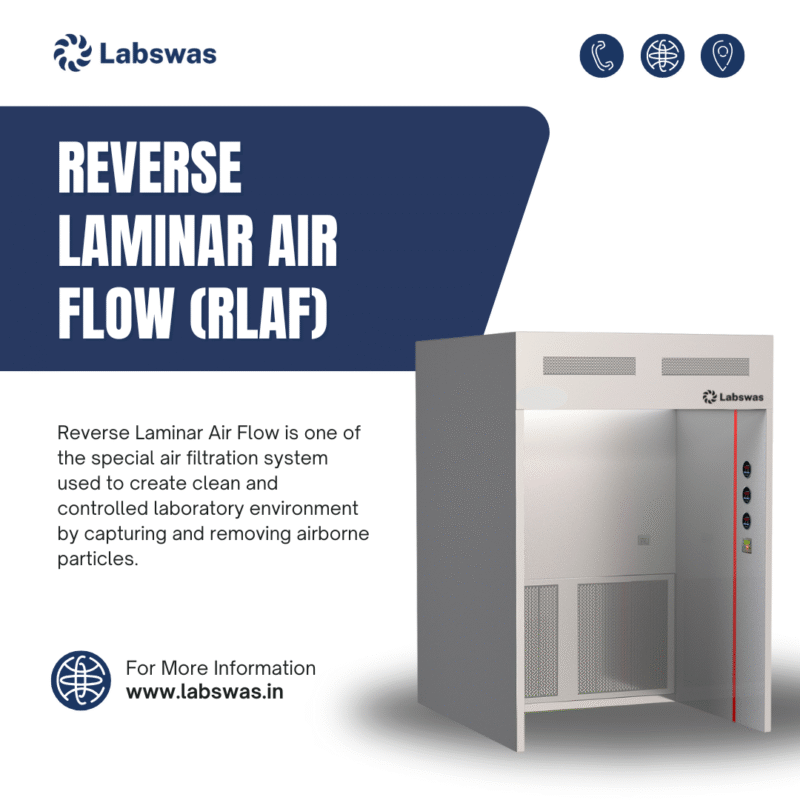
Reverse laminar air flow describes a controlled airflow approach that focuses on protecting the operator, the surrounding space, or sometimes both, depending on how the system is set up. Traditional laminar airflow looks in a different direction altogether. Its priority is the product, keeping it shielded while the operator works within that zone. With reverse laminar air flow, the logic shifts. Air is drawn away from the operator and the immediate work area, carrying airborne particles toward dedicated filtration zones where they can be captured before they spread further.
In RLAF in Pharma settings, these systems are commonly used where potent, hazardous, or sensitizing materials are handled. The goal is to contain airborne particles, prevent cross contamination, and maintain cleanroom integrity.
At a basic level, Reverse Laminar Air Flow units create a unidirectional airflow pattern that captures dust, aerosols, or vapors at the point of generation and safely removes them through high efficiency filtration.
Reverse Laminar Air Flow Working Principle
Understanding the reverse laminar air flow working principle helps clarify why these systems are effective when designed correctly.
The process works as follows:
- Air is drawn from the surrounding cleanroom into the Reverse Laminar Air Flow unit
- A controlled airflow pattern is created, typically moving away from the operator
- Contaminated air is captured at the source during dispensing or handling
- Air passes through HEPA filters that remove particulates
- Filtered air is either exhausted or safely recirculated, depending on system design
The key is consistency. Air velocity, airflow uniformity, and filter integrity must remain stable throughout operation. If airflow fluctuates or dead zones form, containment performance is compromised.
This is why the design and validation of Reverse LAF are just as important as their presence.
Applications of RLAF in Pharma
RLAF in Pharma environments is used wherever containment and cleanliness must coexist. Common applications include:
- Weighing and dispensing of active pharmaceutical ingredients
- Handling of potent compounds and cytotoxic materials
- Sampling operations in cleanroom environments
- Intermediate processing steps requiring operator protection
- Transfer of powders between containers
Benefits of Reverse Laminar Air Flow Unit
When properly designed and installed, reverse laminar air flow unit provide measurable operational benefits. Key advantages include:
- Enhanced operator protection from airborne contaminants
- Reduced risk of cross contamination between batches
- Improved containment during powder handling
- Support for cleanroom classification requirements
- Alignment with occupational safety and regulatory expectations
Why System Quality Matters in RLAF Installations
Not all RLAF units perform the same, even if specifications appear similar. In practice, performance depends on design discipline, component quality, and validation depth.
A reliable RLAF pharma unit must deliver:
- Stable airflow velocity across the working zone
- Uniform airflow distribution without turbulence
- Reliable HEPA filtration performance
- Ergonomic design that supports operator workflow
Shortcuts in any of these areas usually surface during qualification or routine operation.
Manufacturing Infrastructure and Design Capability
The quality of an RLAF solution starts with the reputed laminar air flow manufacturer.
A reliable supplier of RLAF in Pharma systems should operate with:
- Controlled manufacturing facilities
- Dedicated cleanroom equipment production areas
- Documented design and assembly procedures
- In-house testing capabilities for airflow and filtration
Manufacturers who build containment systems regularly understand where failures occur and how to prevent them.
Raw Materials and Component Quality
Component selection directly influences system performance. Key elements that require careful attention include:
- HEPA filter grade and certification
- Fan and motor reliability
- Housing material quality and finish
- Seal integrity to prevent leakage
In reverse laminar air flow systems, even minor compromises in material quality can affect containment efficiency and long-term reliability.
Engineering, Research, and Validation Support
A competent reverse laminar air flow supplier does not rely solely on standard designs. Strong engineering support includes:
- Custom airflow modelling for specific applications
- Risk assessment based on material handling requirements
- Support during installation and commissioning
- Assistance with IQ, OQ, and PQ documentation
Understanding the reverse laminar air flow working principle in practical terms helps manufacturers design systems that function reliably on the production floor, not just under ideal or theoretical conditions.
Compliance, Certification, and Documentation
In pharmaceutical environments, documentation matters as much as equipment. A reliable RLAF supplier should support:
- GMP-aligned design principles
- Compliance with cleanroom standards
- HEPA filter integrity test reports
- Air velocity and airflow uniformity data
- Validation documentation suitable for regulatory audits
These elements help ensure smooth inspections and long-term compliance.
Ease of Operation and Maintenance
Operational practicality is often overlooked during selection. A well-designed reverse laminar air flow system should offer:
- Clear visual indicators for airflow status
- Easy access for filter replacement
- Minimal vibration and noise
- Designs that do not obstruct operator movement
Long-Term Reliability and Service Support
Containment systems are long-term assets. A dependable RLAF in Pharma solution is backed by:
- Availability of spare parts
- Technical service support
- Preventive maintenance guidance
- Clear upgrade or modification pathways
Get the Best RLAF in Pharma Solutions
Selecting a reliable RLAF solution is not about installing equipment to satisfy a checklist. It is about choosing a system that performs consistently under real production conditions.
Effective reverse laminar air flow systems are built on sound engineering, quality materials, stable airflow design, and thorough validation. When the reverse laminar air flow working principle is properly applied and supported by disciplined manufacturing and documentation, RLAF becomes a dependable part of pharmaceutical contamination control rather than a source of uncertainty.
In RLAF in Pharma environments, reliability is not measured by initial installation alone. It is proven every day the system operates without drawing attention to itself. That quiet consistency is often the strongest indicator that the right choice was made.